Brewery for Sale in Iowa: Why the Real Opportunity Is the Real Estate | PIVO Brewery Case Study
By Jared Hottle | Published: 2026-02-10
When a Brewery Goes Up for Sale, the Real Opportunity Is the Real Estate
By Jared Hottle | February 10, 2026
Most people hear "brewery for sale" and think about beer. The smart money thinks about the building, the land, the zoning, the foot traffic, and the income streams that have nothing to do with hops.
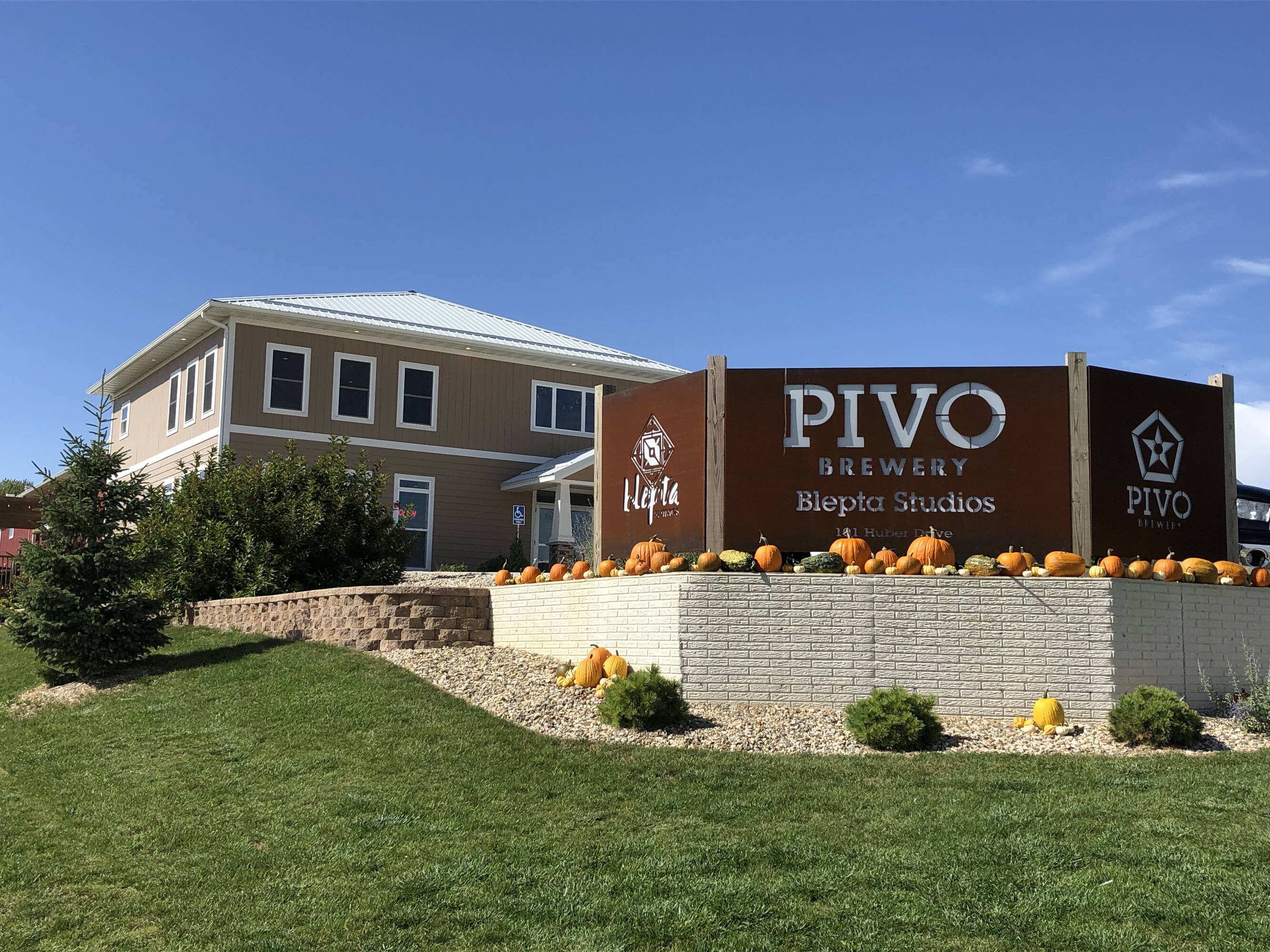
PIVO Brewery at 101 Huber Drive in Calmar, Iowa just hit the market at $1,850,000. For that price, a buyer gets 19,000 square feet of purpose-built commercial space — constructed in 2017 with a 4,500-square-foot event center added in 2019 — housing a 15-barrel production brewery, a 40-tap taproom with a full commercial kitchen, a wedding and event venue that seats 350–400, an on-site art studio, outdoor beer gardens, and direct trail access from the Prairie Farmer Bike Trail. The property sits just off Highway 52 on the north edge of Calmar, nine miles south of Decorah.
At roughly $97 per square foot, this is a fully built-out, mixed-use hospitality asset with six Great American Beer Festival awards, a proven revenue model, and infrastructure that would cost multiples of the asking price to replicate from scratch.
That's not just a brewery. That's a case study in what commercial real estate looks like when it's designed to generate income from every angle.
And across the country, properties like this are quietly hitting the market as the craft brewing industry contracts for the first time in twenty years. For commercial real estate investors and owner-operators who understand what they're actually looking at, this is a window.
Brewery Properties: The Mixed-Use Asset Class Nobody's Talking About
Brewery properties don't fit neatly into a standard commercial real estate category. They're part light industrial (production equipment, utilities, warehousing), part retail/restaurant (taproom, kitchen, point-of-sale), part event venue (private rentals, weddings, corporate events), and part experiential entertainment (tastings, classes, live music).
That hybrid profile is exactly what makes them interesting as investment properties.
A property like PIVO's comes with infrastructure that would cost $2 million or more to replicate today: 19,000 square feet of 2017-built construction with commercial-grade plumbing and wastewater systems, three-phase electrical, glycol cooling loops, walk-in coolers, a full commercial kitchen buildout, ADA-compliant restrooms for high-occupancy use, specialized ventilation, a hardwood dance floor, stage risers, AV systems with HDMI display screens, and a 4,500-square-foot climate-controlled event hall with dedicated keypad entry and an attached garage for caterer access. Whether the next operator brews beer, distills spirits, opens a cidery, runs a food hall, or converts the space into a multi-tenant experiential retail concept, the bones are already there — and they're only seven years old.
The zoning is often the most underappreciated asset in commercial real estate transactions involving brewery properties. These properties typically sit in light industrial or mixed-use zones that permit production, retail sales, food service, and event hosting under a single roof. That kind of flexible zoning is increasingly rare and increasingly valuable as municipalities tighten land use regulations. A property already permitted for all of those uses — with a seven-year operating history to prove it — eliminates years of entitlement risk for the next buyer.
How Breweries Anchor Commercial Real Estate Districts
If you've spent any time analyzing retail or mixed-use districts, you know the value of an anchor tenant. Grocery stores anchor strip centers. Restaurants anchor downtown blocks. Breweries anchor entire commercial corridors — and increasingly, entire neighborhoods.
The Brewers Association estimates the craft beer industry's total economic impact at $77 billion and nearly 460,000 jobs nationwide (Brewers Association, 2024). But the local impact is where it gets interesting for real estate investors.
A brewery with a strong taproom doesn't just sell beer. It generates predictable, recurring foot traffic from a demographic that commercial landlords dream about: adults aged 25–54 with disposable income who spend 1–3 hours per visit, often in groups, and frequently combine the trip with dining, shopping, or other entertainment. That traffic pattern lifts surrounding retail, creates demand for adjacent restaurant and service tenants, and supports higher rents in the immediate trade area.
PIVO demonstrates this at a rural scale in Northeast Iowa. Calmar has a population of just under 1,000. Winneshiek County has fewer than 21,000 residents. Yet PIVO has built a regional draw that extends well beyond the county line — fueled by its proximity to Decorah (a tourism destination that punches far above its weight), its position on the Prairie Farmer Bike Trail, and a national reputation built on six GABF awards. As owner Craig Neuzil has noted, "With our town's population under 1,000 people, we have to draw people here" (AgMRC). That they've succeeded — earning a Travelers' Choice award on TripAdvisor and consistent 5-star wedding venue reviews on The Knot — is evidence that the property's location strategy works.
Visitors to PIVO then eat at local restaurants, stay at area lodging, and shop in nearby downtowns. The brewery's annual PIVO Fest, regular trivia and BINGO nights, bags leagues, live music, and wedding bookings create predictable traffic spikes that surrounding businesses can plan around.
For investors who own or are evaluating commercial property near a brewery, the question isn't "how's the beer?" It's "what's the traffic count, what's the average dwell time, and what's the spillover spending pattern?"
How to Value a Brewery Property: Three Layers Every Investor Should Separate
Valuing a brewery property requires separating three distinct layers of value that most brokers and appraisers blend together — often to the buyer's disadvantage.
Layer 1: The Real Estate
This is the land and building, valued independently of the business operating inside it. What would this property sell for if it were vacant? What's the replacement cost of the improvements? What are comparable light-industrial or mixed-use properties trading for in the market on a per-square-foot basis?
In the Midwest, brewery-suitable commercial properties typically trade between $50 and $150 per square foot, depending on location, condition, and infrastructure. PIVO's listing at $97 per square foot for 19,000 square feet of 2017-built, fully built-out mixed-use space — with a commercial kitchen, production area, 40-tap taproom, and a 4,500-square-foot event center — sits right in the middle of that range. But consider the replacement cost: building 19,000 square feet of new commercial construction today in Iowa, including the specialized brewery buildout, kitchen, event center finishes, AV, HVAC, and site work, would likely run $150–$250+ per square foot — putting replacement cost at $2.85 million to $4.75 million before equipment.
Breweries that own their real estate command significantly higher total valuations than those on leases, because the property provides collateral, generates rent-equivalent income, and appreciates independently of beer sales.
Layer 2: The Equipment (FF&E)
Brewing equipment is stainless steel, purpose-built, and retains value better than most restaurant or retail fixtures. A 15-barrel brewhouse with fermenters, brite tanks, a glycol chiller, grain mill, and packaging equipment can represent $300,000 to $750,000+ in appraised value. Taproom fixtures, commercial kitchen equipment, event center furniture (tables, chairs, tablecloths, stage risers, microphones, display screens), and HVAC systems add another layer.
For context, when Pivot Brewing Company in Lexington, Kentucky went to auction in 2024, their smaller 10-barrel system — with fermenters, tanks, and support equipment — carried a minimum bid of $430,000 for the entire operation including two taproom locations and all intellectual property (New Mill Capital, 2024). PIVO's larger 15-barrel system and substantially more extensive venue buildout would appraise higher.
Equipment value matters for two reasons: it's tangible collateral for financing, and it establishes a floor value for the acquisition. Even in a worst-case liquidation scenario, the equipment has standalone resale value.
Layer 3: The Operating Business
This is where the income approach comes in. A brewery generating revenue from taproom sales, food, events, distribution, merchandise, and rentals is valued as a going concern using cash flow multiples.
Brewery Valuation Benchmarks:
| Valuation Method | Typical Range | What It Tells You |
|---|---|---|
| Revenue multiple | 0.5x–1.5x annual revenue | Top-line size of opportunity |
| EBITDA multiple | 4.0x–6.0x trailing 12 months | Operational cash flow return |
| SDE multiple | 3.24x–4.19x | Owner's actual take-home earning power |
| Per barrel of capacity | $100–$300/bbl | Production infrastructure value |
| Per taproom square foot | $50–$100/sq ft | High-margin retail space value |
| Per event seat | $200–$400/seat | Venue revenue potential |
Sources: Peak Business Valuation, DealStream, BizBuySell, First Key Consulting
The median sale price for breweries on BizBuySell has hovered around $300,000 in 2023–2024 for smaller operations. PIVO's $1.85 million asking price reflects what the median doesn't capture: 19,000 square feet of nearly new construction, a 350-seat event venue, and a nationally awarded brand — not a 2,000-square-foot taproom with a 3-barrel pilot system.
Back into the numbers. If the real estate alone is worth $1.0–$1.4 million based on comparable mixed-use/light-industrial pricing, and the equipment appraises at $400,000–$700,000, then the asking price of $1.85 million may actually be undervaluing the operating business and brand equity — or it may represent a motivated seller offering a turnkey deal at a compelling basis. Either way, the math deserves a serious look.
Revenue Diversification: Why It Drives Property Value
A brewery property's value is directly tied to the number and quality of income streams it can support. This is no different from how a mixed-use building with ground-floor retail, upper-floor office, and rooftop event space commands a premium over a single-use box.
PIVO Brewery runs at least six distinct revenue channels from one property:
- Taproom draft and packaged sales — 40 taps, highest-margin channel at 60–80% gross margins
- Food program — full commercial kitchen, sandwich and platter menu, drives dwell time
- Event center rentals — 4,500 sq ft, 350–400 seats, weddings, corporate events, private parties with a growing reputation on The Knot and other wedding platforms
- Art studio classes — Blepta Studios, on-site social painting and batik egg classes, drives non-beer-drinker traffic
- Merchandise and gift shop — branded goods plus locally made art
- Seasonal outdoor programming — beer garden, bike trail access, annual festivals, trivia nights, BINGO, bags leagues, live music
PIVO also secured a $50,000 USDA Value Added Producer Grant in 2020 to launch its cider production program (AgMRC) — evidence of a business actively diversifying its product line and an additional revenue stream that transfers with the operation.
Each of these revenue streams represents a separate lease equivalent in a multi-tenant property. The taproom is your anchor restaurant tenant. The event center is your banquet/venue tenant. The art studio is your experiential retail tenant. The beer garden is your seasonal pop-up. Except here, one operator controls all of it — which means lower vacancy risk, unified management, and the ability to cross-promote across channels.
For an investor evaluating this property, the question is: how many of these revenue streams survive if the current operator leaves? A 19,000-square-foot property built out with a commercial kitchen, a 350-seat event space, a production area, and retail frontage can support multiple business concepts — brewery, cidery, distillery, food hall, event venue, or multi-tenant experiential space. That's the definition of adaptive reuse potential — and it's what protects your downside.
Why Brewery Properties Are Hitting the Market in 2025–2026
The timing matters. Craft brewery closures outpaced openings for the first time in 2024 — 501 closures versus 434 openings nationwide (Brewers Association). In 2025, the gap widened: 434 closures versus just 268 openings. The closure rate remains around 4–5% of total operating breweries — comparable to restaurant industry turnover — but the direction is clear.
For commercial real estate buyers, this correction creates three types of acquisition opportunities:
1. Distressed acquisitions. Breweries closing or downsizing may sell equipment and assign leases at below-market rates. The infrastructure remains valuable even if the beer business didn't work.
2. Owner-operator transitions. Founders who built successful operations but are ready to exit. PIVO fits this category — a profitable, GABF-winning operation built by a retired Air Force officer and his wife who returned to their roots in Winneshiek County, constructed a purpose-built facility, won national awards, and grew the business to a point where it has real enterprise value. The right buyer inherits a going concern with a 19,000-square-foot property, proven revenue streams, and established brand equity.
3. Repositioning plays. Acquiring a brewery property and converting it to a different but compatible use: cidery, distillery, food hall, co-working space with F&B, event venue, or multi-tenant experiential retail. The zoning, utilities, and buildout are already in place.
In Iowa specifically, the Gazette reported in February 2025 that multiple brewery owners were seeing steady taproom sales declines. Iowa's craft market share sits at just 1.5% of statewide beer sales — meaning there's both competitive pressure and significant whitespace depending on how you read the data. A well-positioned property with diversified revenue in a tourism-adjacent location like Northeast Iowa's Driftless Region is a fundamentally different proposition than a taproom in a saturated urban market.
Due Diligence Checklist: Buying a Brewery as Commercial Real Estate
Whether you're buying the property, the business, or both, here's what to evaluate before making an offer:
Real Estate Fundamentals
- Zoning classification and permitted uses (confirm production, retail, food service, events, and entertainment are all allowed)
- Building condition, age, and deferred maintenance (PIVO was built in 2017 — under 10 years old)
- Utility capacity: water, wastewater, electrical (three-phase?), gas
- Parking ratio relative to maximum occupancy (350–400 event capacity requires significant parking)
- ADA compliance for all public spaces (PIVO's event center is wheelchair accessible per venue listings)
- Environmental assessment (brewing involves chemicals, wastewater, grain disposal)
- Lot size, setbacks, and expansion potential
- Ownership structure: fee simple vs. ground lease vs. leasehold
Equipment and Infrastructure
- Independent equipment appraisal (brewing system, fermentation, packaging, kitchen, HVAC)
- Age and maintenance history of all major systems
- Replacement cost vs. current market value
- Transferability of any equipment leases or liens
Business Operations (if acquiring as going concern)
- Revenue breakdown by channel (taproom, food, events, distribution, merch)
- Trailing 12-month and 3-year P&L with EBITDA normalization
- Event center booking history and forward pipeline (wedding bookings may extend 12–18 months out)
- All licenses, permits, and their transfer requirements (brewery license transfers can take 60–120+ days)
- Brand assets: GABF medals, social media, Untappd/Google/TripAdvisor ratings, wedding platform reviews, customer database
- Status of the $50,000 USDA Value Added Producer Grant and any associated obligations
Market Position
- Trade area demographics and population trends (Winneshiek County: ~21,000; Decorah tourism market)
- Competing breweries, restaurants, and event venues within 30-mile radius
- Tourism traffic patterns and seasonal demand curves
- Proximity to Highway 52, Prairie Farmer Bike Trail, Decorah, and other demand generators
- Local economic development incentives or tax programs
The Bottom Line on Brewery Real Estate Investment
The craft brewing correction is creating a commercial real estate opportunity that most brokers aren't equipped to underwrite. These aren't standard restaurant deals or industrial acquisitions. They're hybrid hospitality assets with production infrastructure, event venue capability, and retail frontage — often on well-zoned parcels with utilities and buildout that would cost seven figures to replicate.
PIVO Brewery — 19,000 square feet, built 2017, listed at $1,850,000 — represents what a brewery property looks like when it's built right. Six GABF awards. A 350-seat event center with a growing wedding venue reputation. A full commercial kitchen. Bike trail access. Tourism-adjacent positioning in Iowa's Driftless Region. Diversified revenue from six channels. And an asking price of $97 per square foot for a property that would cost two to three times that to build today.
Whether the next chapter is a continuation of the brewing operation, a pivot to a different hospitality concept, or a repositioning as multi-tenant experiential space, the real estate tells the story.
The beer might be what gets people in the door. The property is what holds the value.
Listing: PIVO Brewery on Crexi — 101 Huber Dr, Calmar, IA 52132 | 19,000 SF | Built 2017 | $1,850,000
Interested in this property or similar investment opportunities in Iowa? Contact Hottle Real Estate →
Jared Hottle is the founder of Hottle Real Estate, specializing in commercial and investment properties across Iowa and the Midwest. For questions about brewery properties, mixed-use hospitality assets, or investment opportunities in Northeast Iowa, reach out to our team.
Sources:
- Brewers Association, "2024 U.S. Craft Brewing Industry Figures" (May 2025)
- Brewers Association, "The 2025 Year in Beer" (December 2025)
- Peak Business Valuation, "Brewery Valuation Multiples" (2025)
- First Key Consulting, "How to Value Your Craft Brewing Company" (2024)
- DealStream, "Brewery Valuation Rules of Thumb 2025"
- BizBuySell, "Brewery Business Valuation Multiples & Financial Benchmarks"
- GHJ Advisors, "Craft Beer Metrics: Financial Ratios and KPIs"
- Craft Brewery Financial Training, "Taproom vs. Distribution Profitability"
- The Gazette, "Declining sales at some Eastern Iowa breweries" (February 2025)
- New Mill Capital, Pivot Brewing Company Auction (2024)
- Agricultural Marketing Resource Center, "Pivo Brewery" case study
- The Knot, PIVO Brewery wedding venue profile
- PIVO Brewery (pivobrew.com)
- Crexi listing #2285860