Waverly Senior Housing Portfolio: 101-Unit HUD Section 8 Senior Investment in Waverly, Iowa
By Jared Hottle | Published: 2026-02-10T12:00:00.000Z
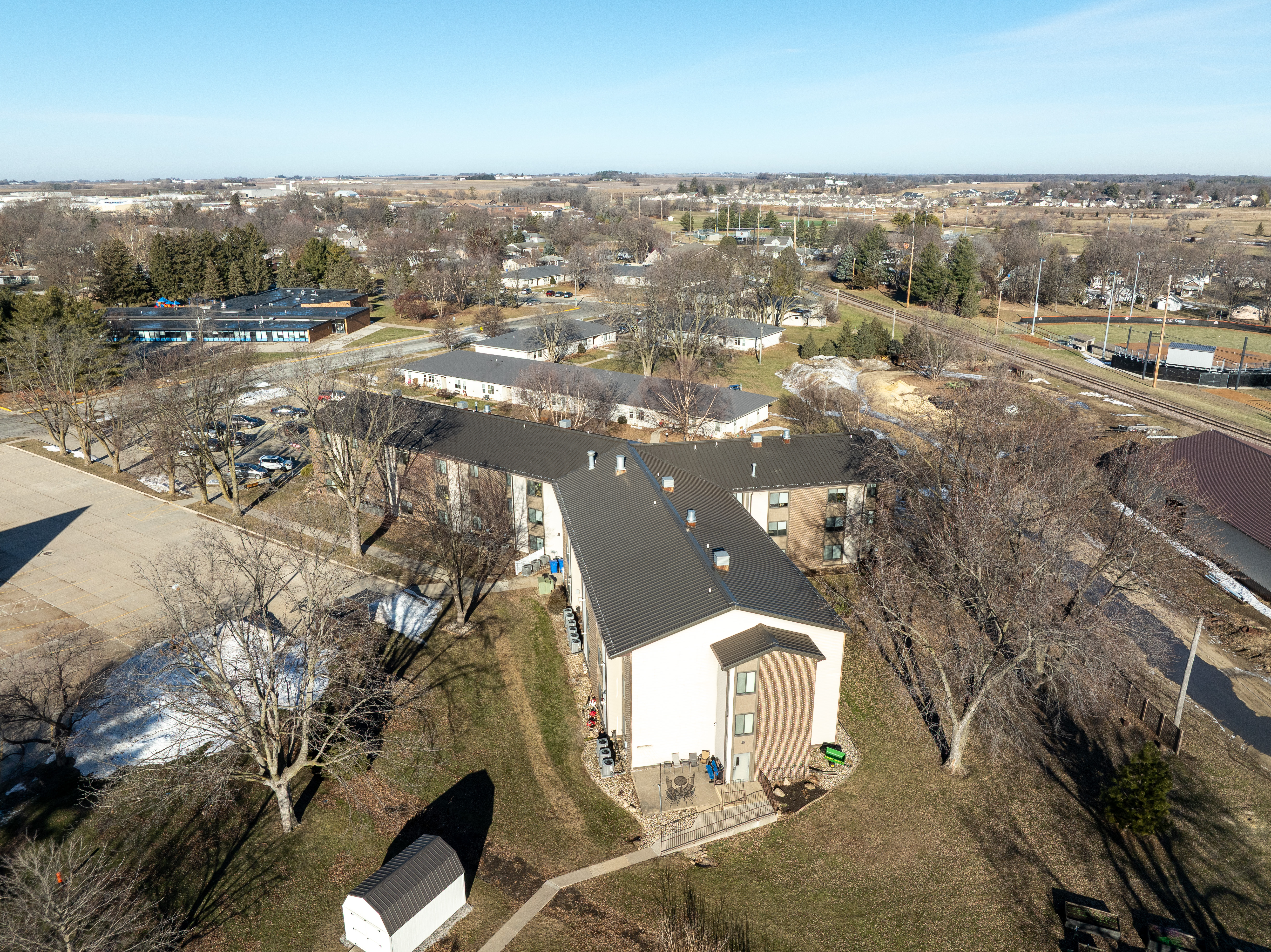
Aerial view of the Waverly Senior Housing Portfolio — Waverly Manor (210 15th St. NW) and Waverly Homes (320 15th St NW) — spanning 5.59 acres in Waverly, Iowa.
The Waverly Senior Housing Portfolio represents what every HUD property owner hopes to find: 101 elderly-designated units carrying 100% Project-Based Section 8 subsidy coverage, sitting on a combined 5.59-acre parcel in one of Northeast Iowa's most stable communities. The portfolio consists of two adjacent properties — Waverly Manor at 210 15th St. NW and Waverly Homes at 320 15th St NW — both located in Waverly, Iowa, less than 0.2 miles from W Bremer Avenue, the city's main retail corridor.
For current and prospective owners of HUD low-income senior housing, this portfolio illustrates the structural advantages that make federally subsidized elderly housing one of the most resilient asset classes in commercial real estate. Government-guaranteed rental income, annual contract rent increases tied to inflation, and a demographic tailwind that shows no sign of slowing — these are not theoretical benefits. They are embedded in the operating structure of properties like the Waverly Senior Housing Portfolio.
Table of Contents
- Portfolio Overview: Two Properties, One Efficient Footprint
- Waverly Manor: 54-Unit Section 8 Elderly Community
- Waverly Homes: 47-Unit RAD Conversion with Long-Term HAP Contract
- Why HUD Senior Housing Owners Benefit: The Financial Case
- Government-Guaranteed Rental Income: Eliminating Collection Risk
- Built-In Rent Growth: OCAFs, AAFs, and Rent Comparability Studies
- Near-Zero Vacancy: The Senior Housing Demand Equation
- The RAD Advantage: How Conversion Strengthens Ownership
- Waverly, Iowa: A Stable Market with Growing Senior Demographics
- Key Takeaways for Property Professionals
- Sources
Portfolio Overview: Two Properties, One Efficient Footprint
The Waverly Senior Housing Portfolio totals 101 units across seven buildings on adjacent parcels. SAB Capital is marketing the portfolio as a combined offering, and the adjacency of both properties creates meaningful operational efficiencies — shared management infrastructure, consolidated maintenance teams, and a single geographic footprint that minimizes travel time and overhead.
- Waverly Manor — 54 units, 34,333 SF, one three-story building on 1.90 acres
- Waverly Homes — 47 units, 25,850 SF, six single-story buildings on 3.69 acres
- Combined Acreage — 5.59 acres
- HAP Coverage — 100% across all 101 units
- Construction — Poured concrete foundations, masonry exteriors, pitched roofs
- Tenancy — Elderly-designated
- Limited Dividend — Non-Profit
Both properties carry HUD Contract Number IA05RD00001 and operate under separate renewal structures. Waverly Manor holds an Option 2 HAP renewal with a 20-year term effective September 1, 2010, expiring August 31, 2030. Waverly Homes operates under a RAD PH (Rental Assistance Demonstration — Public Housing) contract with a 20-year term effective July 1, 2014, expiring June 30, 2034.
Waverly Manor: 54-Unit Section 8 Elderly Community
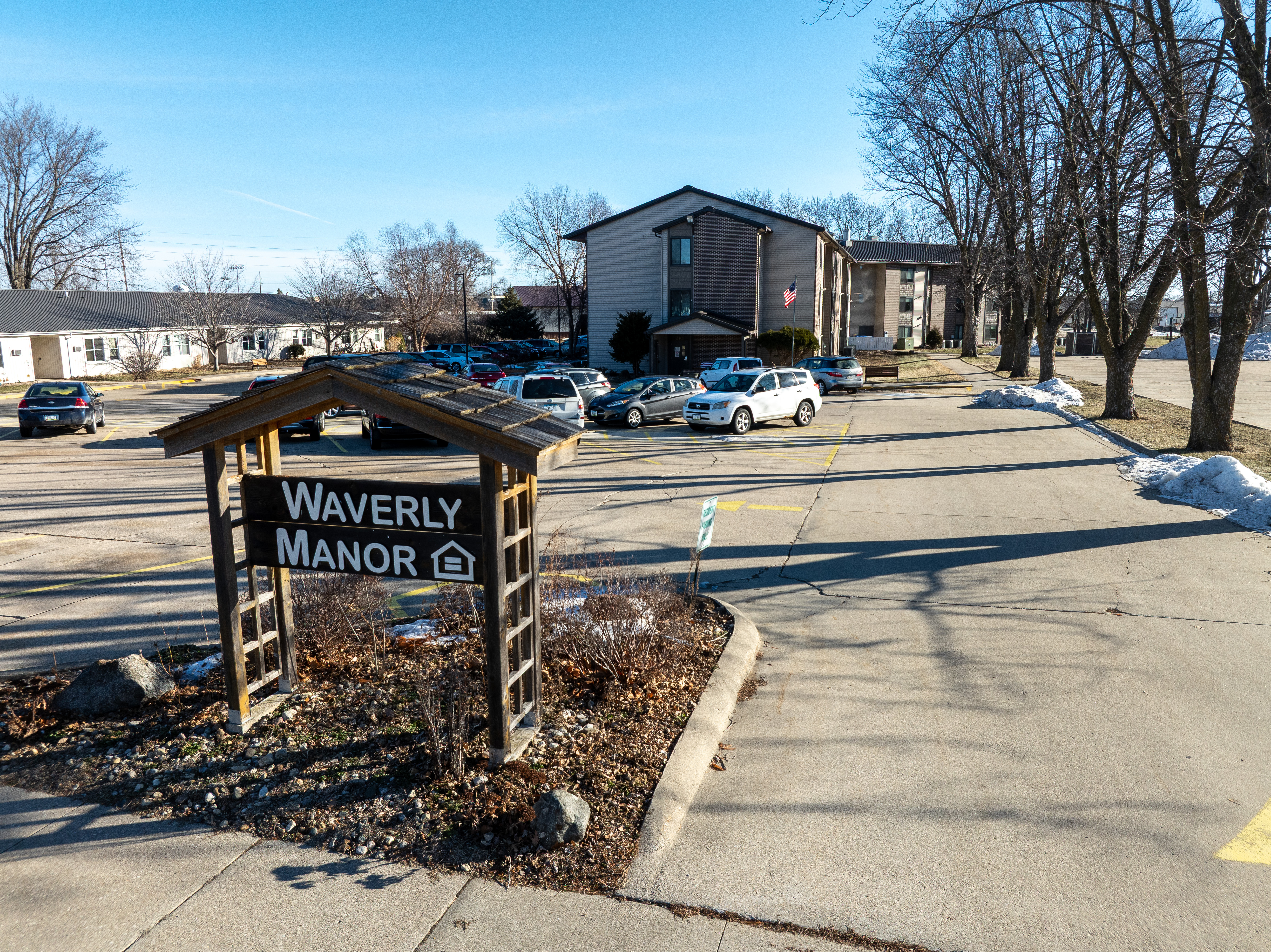
Waverly Manor is a three-story, 54-unit elderly community built in 1979 at 320 15th St NW, Waverly, Iowa 50677. Every unit is a one-bedroom configuration at 600 square feet, totaling 32,400 SF of gross leasable area.
The property's current HAP rents as of July 2024 stand at $668 per unit per month. The 2025 Rent Comparability Study (RCS) pro forma rents increase that figure to $775 per unit — a 16% lift that demonstrates the upside embedded in periodic rent resets. The 2026 Small Area Fair Market Rent (SAFMR) for the area is $810 for a one-bedroom unit, meaning the pro forma rents still sit below the local market ceiling.
Waverly Manor carries a 2022 REAC score of 86c, indicating solid physical condition. The landlord pays all utilities — water, electric, gas, and sewer — with no tenant-paid utility obligations.
Pro Forma Financial Summary — Waverly Manor:
- Gross Annual Rent Potential — $502,200 ($9,300 per unit)
- Vacancy & Concessions — $25,110 (5%)
- Effective Gross Income — $477,090 ($8,835 per unit)
- Total Operating Expenses — $267,495 ($4,954 per unit)
- Operating Expense Ratio — 56%
- Replacement Reserves — $13,800 ($300 per unit)
- Net Operating Income — $195,795 ($3,626 per unit)
Waverly Homes: 47-Unit RAD Conversion with Long-Term HAP Contract
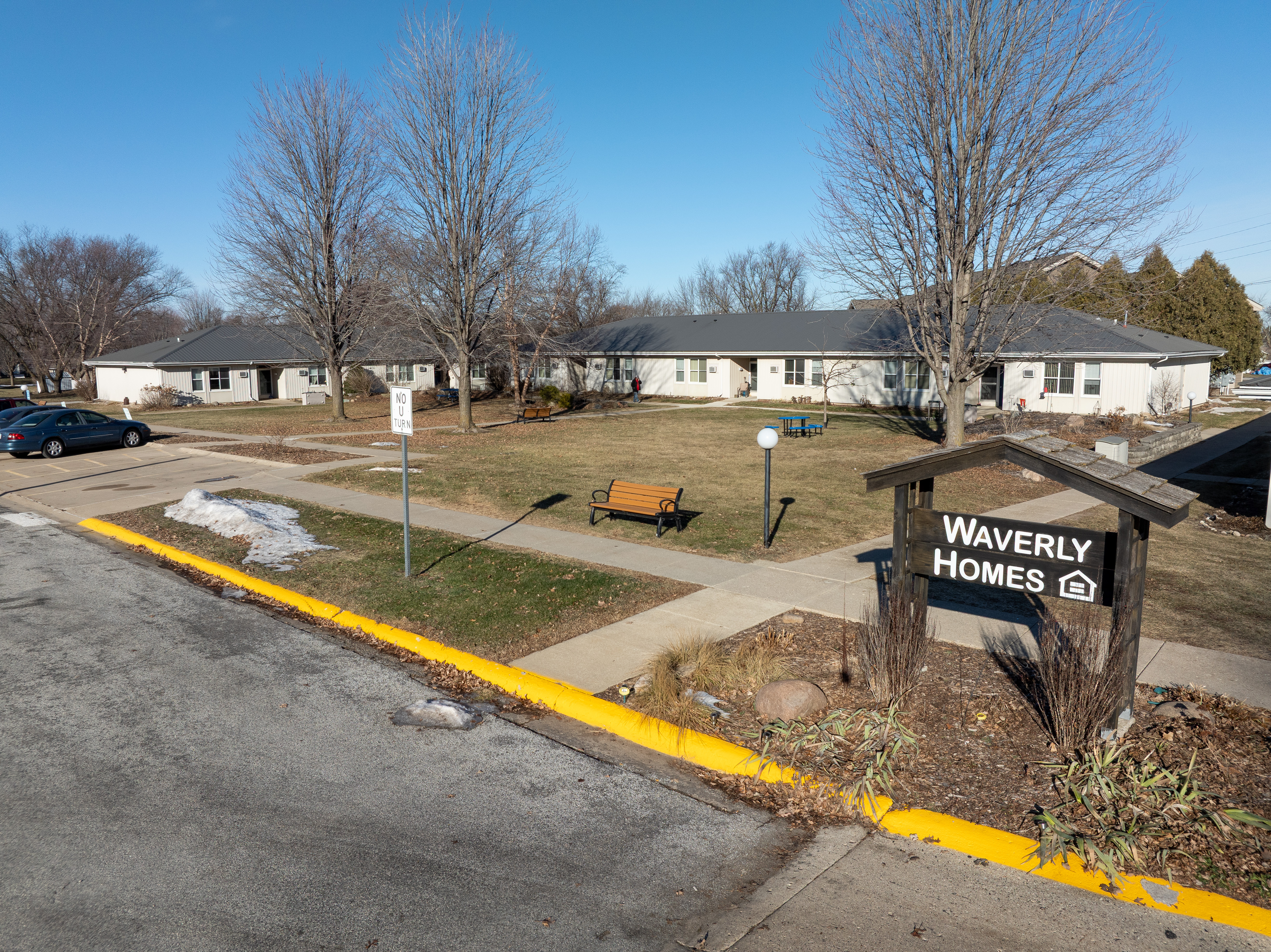
Waverly Homes at 210 15th St. NW, Waverly, Iowa 50677 consists of six single-story buildings totaling 47 units and 25,850 SF of leasable area on 3.69 acres. Originally built in 1970 as traditional public housing, the property converted to Project-Based Rental Assistance (PBRA) through HUD's Rental Assistance Demonstration (RAD) program on July 1, 2014.
The unit mix includes four studios, 42 one-bedroom units (549 SF each), and one two-bedroom unit. Current HAP rents as of July 2025 range from $506 for studios to $635 for one-bedrooms and $775 for the two-bedroom. Pro forma rents reflecting the 2026 projected OCAF increase of 3.5% bring those figures to $524, $657, and $802 respectively. The 2026 SAFMRs — $730 for studios, $810 for one-bedrooms, and $1,060 for two-bedrooms — indicate substantial room for continued rent growth.
Waverly Homes earned a 2024 NSPIRE score of 94, reflecting strong physical and management performance under HUD's updated inspection standards.
Pro Forma Financial Summary — Waverly Homes:
- Gross Annual Rent Potential — $366,005 ($7,787 per unit)
- Vacancy & Concessions — $18,300 (5%)
- Effective Gross Income — $384,305 ($8,177 per unit)
- Total Operating Expenses — $252,759 ($5,378 per unit)
- Operating Expense Ratio — 66%
- Replacement Reserves — $14,100 ($300 per unit)
- Net Operating Income — $117,446 ($2,499 per unit)
The combined portfolio delivers a total pro forma NOI of $313,241 across 101 units.
Why HUD Senior Housing Owners Benefit: The Financial Case
Owning HUD low-income senior housing is fundamentally different from owning conventional multifamily. The federal subsidy structure removes several of the largest risks that conventional landlords face — tenant default, market-driven vacancy, and rent stagnation. The Waverly Senior Housing Portfolio exemplifies every one of these advantages.
Government-Guaranteed Rental Income: Eliminating Collection Risk
In a Project-Based Section 8 property, tenants pay 30% of their monthly adjusted income toward rent. HUD pays the owner the difference between the tenant's portion and the full contract rent through the Housing Assistance Payments (HAP) contract. The income stream is not dependent on the tenant's ability to pay — it is backed by the federal government.
For Waverly Manor, that means $502,200 in gross annual rent potential with the federal government covering the gap between tenant income and contract rent on all 54 units. For Waverly Homes, the figure is $366,005 across 47 units. The combined portfolio generates $868,205 in gross annual rent potential, virtually all of it government-guaranteed.
Congress appropriated $18.543 billion for the Project-Based Rental Assistance program in FY 2026 — a $2.053 billion increase over FY 2025, according to the National Council of State Housing Agencies. The FY 2026 appropriations bill continues support for renewal of Section 8 project-based contracts and provides flexibility to use recaptured balances to prevent interruptions in rental assistance, according to US Housing Consultants.
The practical impact for owners: collection risk is essentially zero. There are no late payments to chase, no evictions for non-payment to file, no bad debt to write off. The government check arrives.
Built-In Rent Growth: OCAFs, AAFs, and Rent Comparability Studies
One of the most compelling benefits for owners of HUD senior housing is the built-in rent escalation mechanism. Contract rents do not sit flat — they increase annually through multiple channels.
Operating Cost Adjustment Factors (OCAFs) apply to contracts renewed under the Multifamily Assisted Housing Reform and Affordability Act of 1997 (MAHRA). HUD calculates OCAFs at the state level using weighted cost changes across nine categories: electricity, employee benefits, employee wages, fuel oil, goods and supplies, insurance, natural gas, property taxes, and water/sewer/trash. The national average OCAF for 2025 was 4.8%, according to the Federal Register. The 2026 OCAF notice was published in the Federal Register on February 3, 2026.
Waverly Homes already reflects a projected 3.5% OCAF increase for 2026, lifting pro forma rents from current HAP levels to the projected figures.
Annual Adjustment Factors (AAFs) provide a separate rent increase mechanism for other Section 8 contracts, based on CPI shelter and gross rent inflation data combined with private-sector rent sources. HUD published FY 2026 AAFs effective December 9, 2025, according to the Federal Register.
Rent Comparability Studies (RCS), available once every five years, allow owners to reset contract rents to comparable market levels. The impact at Waverly Manor is significant: the 2025 RCS increased pro forma rents from $668 to $775 per unit — a $107 per unit monthly increase, or $69,336 in additional annual gross revenue across 54 units.
For owners, the takeaway is clear: HUD senior housing is not a static income stream. It is a programmatically escalating income stream with multiple pathways for rent growth baked into the contract structure.
Near-Zero Vacancy: The Senior Housing Demand Equation
The 5% vacancy assumption in both pro formas is conservative by industry standards for HUD elderly-designated properties. The demand-supply imbalance in affordable senior housing is severe and worsening.
Nationally, HUD's rental assistance programs serve roughly one in four eligible households due to funding limitations, according to the Congressional Research Service. That means three out of four eligible seniors cannot access subsidized housing. Waiting lists at Section 8 and Section 202 properties routinely stretch for years.
The demographic pressure is intensifying. The oldest baby boomers turn 80 in 2026, driving senior housing demand to record levels. At the same time, year-over-year inventory growth fell to its lowest level since 2006, according to PwC and ULI's Emerging Trends in Real Estate. The National Investment Center for Seniors Housing (NIC) expects the average senior housing occupancy rate to exceed 90% in 2026, with demand-supply imbalances potentially shifting to a shortage from 2027 onward.
In Iowa specifically, the senior population represents approximately 17.81% of total residents, exceeding the national average of 16.84%, according to Iowa State University's Community Indicators Program. Iowa's old-age dependency ratio stands at 28.2 persons aged 65+ per 100 working-age residents. Within Waverly's 5-mile radius, the population is projected to grow from 13,529 in 2024 to 13,906 by 2029, with households increasing from 5,054 to 5,205 over the same period.
For owners, vacancy risk in 100% Project-Based Section 8 elderly housing is as close to zero as commercial real estate gets.
The RAD Advantage: How Conversion Strengthens Ownership
Waverly Homes converted from traditional public housing to Project-Based Rental Assistance through HUD's Rental Assistance Demonstration (RAD) program on July 1, 2014. The RAD conversion fundamentally changed the financial profile of the property.
Under traditional public housing funding, capital improvements depended on an increasingly underfunded federal pipeline. The cost to repair the nation's public housing stock was estimated at $26 billion in 2010 and has ballooned to an estimated $169 billion in 2025, according to HUD User. RAD conversions address this by enabling properties to access private capital markets while maintaining long-term affordability protections.
The conversion gave Waverly Homes a 20-year HAP contract extending through June 30, 2034, with mandatory renewal provisions ensuring continued subsidy beyond the initial term. HUD extended the deadline for RAD conversion applications to September 30, 2029, per Navigate Housing, signaling the program's continued expansion.
For owners, the RAD structure provides the best of both worlds: the reliability of government-backed income with the flexibility to finance capital improvements through conventional lending channels.
Waverly, Iowa: A Stable Market with Growing Senior Demographics
Waverly, Iowa is the county seat of Bremer County, located 20 miles north of Waterloo in the heart of Northeast Iowa's Cedar Valley. The city's population reached an estimated 10,616 residents — its historic peak — reflecting steady growth of 17.6% since 2000, outpacing 63% of similarly sized cities, according to World Population Review.
The local economy is anchored by manufacturing, education, healthcare, and financial services. Bremer County's unemployment rate stood at 3.4% in 2025 with a median household income of $84,464 — well above both state and national averages, according to Census data. Major employers include Northwestern Mutual, Wartburg College (a private Lutheran liberal arts institution), and manufacturers in electrical components and metal fabrication.
The portfolio's location less than 0.2 miles from W Bremer Avenue — Waverly's primary retail corridor — places residents within walking distance of Walgreens, Waverly Health Center, groceries, and daily services. Wartburg College adds cultural and economic vitality. The city offers municipal gigabit internet, the Wartburg-Waverly Sports & Wellness Center, and a nationally accredited Main Street district.
Within a 3-mile radius of the properties, the 2024 average household income is $85,298 and the median household income is $72,993. The 5-mile population is projected to reach 13,906 by 2029, with household growth tracking steadily upward.
Single-story buildings at Waverly Homes, offering accessible one-level living for elderly residents on 3.69 acres in Waverly, Iowa.
The three-story Waverly Manor building at 320 15th St NW provides 54 one-bedroom units with full landlord-paid utilities in Waverly, Iowa.
Key Takeaways for Property Professionals
100% government-backed rental income — All 101 units carry Project-Based Section 8 contracts, eliminating tenant collection risk and delivering a combined $868,205 in gross annual rent potential.
Programmatic rent escalation — OCAFs, AAFs, and Rent Comparability Studies provide multiple annual and periodic mechanisms for rent growth. The 2025 RCS at Waverly Manor alone generated a $107 per unit monthly increase.
Near-zero vacancy risk — With three out of four eligible seniors unable to access subsidized housing nationally and senior housing occupancy projected above 90% in 2026, demand far exceeds supply.
RAD-converted contract security — Waverly Homes holds a 20-year HAP contract through June 30, 2034 with mandatory renewal, providing long-term income certainty backed by HUD.
Combined $313,241 pro forma NOI — The adjacent footprint across 5.59 acres enables operational efficiency with shared management and maintenance.
Demographic tailwind — Iowa's 65+ population exceeds the national average at 17.81%, the oldest baby boomers turn 80 in 2026, and Waverly's 5-mile population is projected to grow through 2029.
Stable local economy — Bremer County unemployment at 3.4%, median household income of $84,464, and a diversified employer base anchored by Northwestern Mutual and Wartburg College.
For owners evaluating their HUD senior housing portfolios, the structural advantages embedded in assets like the Waverly Senior Housing Portfolio — guaranteed federal income, inflation-linked rent growth, and surging elderly demand — represent a financial foundation that conventional multifamily simply cannot replicate.
For more property guides and real estate insights in Northeast Iowa and the Cedar Valley, explore our comprehensive Property Guides section.
Sources
- Section 8 Project-Based Rental Assistance — Center on Budget and Policy Priorities (CBPP)
- FY 2026 HUD Funding Update: PBRA, PRAC, Vouchers — US Housing Consultants
- 2025 Operating Cost Adjustment Factors — Federal Register
- 2026 Operating Cost Adjustment Factors — Federal Register
- FY 2026 Annual Adjustment Factors — Federal Register
- 2025 RAD Updates — Navigate Housing
- RAD Evaluation — HUD User
- Senior Housing Outlook 2026 — PwC / ULI Emerging Trends in Real Estate
- Iowa Elderly Population — Iowa State University Community Indicators Program
- Income Eligibility in HUD Rental Assistance Programs — Congressional Research Service
- Waverly, Iowa Population — World Population Review
- U.S. Census Bureau QuickFacts: Waverly, Iowa
- Project-Based Section 8 Rental Assistance — NCSHA